
Nowadays, it has become much easier to recognize a plant using only a cell phone camera, especially with apps capable of analyzing photos and indicating possible species.
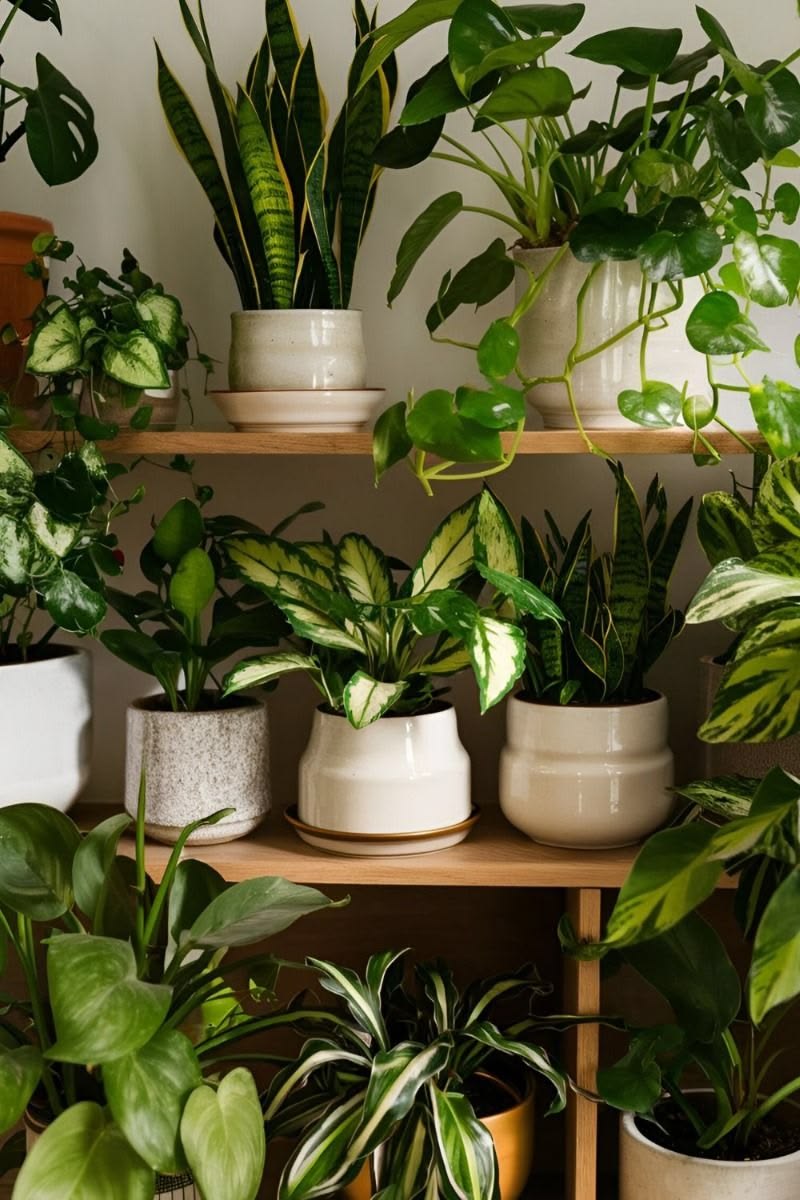
Furthermore, plant recognition apps have become popular because they transform the smartphone into a practical tool for those who enjoy nature and gardening. This way, you can simply photograph a leaf, flower, or other part of the plant to obtain information about its possible identification directly on your phone.
At home, during a walk, while traveling, in the garden, or even during a college activity, this type of app can be quite useful. Therefore, having an identification tool on your phone makes it easier to discover new species and helps you learn more about the plant world.
📱 PlantNet: discover which plant it is using a photo
O PlantNet It is an application created to identify plants from photographs taken with a smartphone. Furthermore, the tool is part of a citizen science project related to plant biodiversity, allowing observations made by users to also contribute to scientific knowledge about different species.
Therefore, anyone looking for a app for recognizing plants You can use PlantNet to photograph a plant and receive identification suggestions. The app works with different types of plants, including flowers, trees, grasses, ferns, vines, cacti, and other plants.
What is PlantNet?
PlantNet is a plant identification app that uses photographs to help the user discover which species they are observing. First, the person takes a picture of the plant using their phone's camera or selects a photograph already stored on the device.
Next, the app compares the image with information in its database and presents possible results. Therefore, it functions as a kind of digital botanical guide that can be taken virtually anywhere.
Furthermore, PlantNet allows users to look up information related to identified plants and explore different botanical categories. This way, users not only have to discover the name of a plant, but can also expand their knowledge of plant species and groups.
The app is particularly geared towards plants found in nature, although it can also identify many plants cultivated in gardens and other environments. Therefore, the results tend to be more interesting when the photograph shows relevant characteristics of the plant.
How does plant recognition work?
First, the user needs to open the app and photograph the plant they want to recognize. After that, they can select the part of the plant that appears in the image, such as a leaf, flower, fruit, or other available structure.
This step is important because different visual characteristics can aid in identification. According to the app's official information, flowers, fruits, and leaves are among the most useful parts to photograph, while details such as thorns, buds, and stem hairs can also contribute to the result.
Next, PlantNet presents possible identifications based on the submitted photograph. Therefore, the better the image and the more relevant features visible, the greater the chances of obtaining a useful result.
However, it's important to understand that an identification app is not a substitute for a specialist. Different plants can have very similar characteristics, and therefore, the result should be treated as an assisted identification, especially when there is a decision related to the consumption or medicinal use of the plant.
How can I take a better photo to identify a plant?
One of the best ways to improve the result is to photograph the plant in good lighting. This way, leaves, flowers, and other features become more visible for analysis.
Additionally, it's worth avoiding photographs taken from too far away. An image where the plant occupies a significant portion of the screen can provide more detail for identification.
On the other hand, it's not necessary to photograph only the entire plant. In many cases, a close-up photo of a leaf or flower can be more informative. Therefore, when possible, it's worthwhile to take pictures of different parts of the same plant.
PlantNet itself recommends providing varied visual information to improve the quality of identification. Therefore, photographing a flower, a leaf, and the entire plant can be more helpful than sending just a generic image.
Main features of PlantNet
One of the app's main functions is precisely that. plant identification by photography. In this way, the user can use the cell phone camera to investigate a species found during a walk, in a garden, or in another environment.
Furthermore, PlantNet allows you to explore species at different taxonomic levels, including genus and family. Therefore, even when the exact identification is not immediately clear, the user can obtain information that helps to better understand the group to which that plant belongs.
Another important feature is the ability to record observations. This allows frequent users of the app to track the plants they've found and contribute information to the project.
Furthermore, observations can undergo collaborative evaluation. In this way, the user community also participates in the process of improving the information available on the platform.
The app also has features related to maps and observation exploration. Therefore, in addition to recognizing a plant, the user can transform the experience into a way to explore the biodiversity found in different locations.
The app also functions as a citizen science tool.
One of the most interesting aspects of PlantNet is that it wasn't created solely as a commercial tool for plant identification. The project is also related to citizen science and the documentation of plant biodiversity.
In this way, when users record observations, this information can contribute to projects related to the study of plants. The observations can be analyzed and, according to the validation process, contribute to the collective knowledge about different species.
Therefore, the app can be interesting both for those who simply want to discover the name of a plant and for students, curious individuals, and people who enjoy observing nature.
Furthermore, this approach makes using the app more interesting over time. Instead of simply downloading and forgetting about the tool after a few uses, the user can record their own discoveries and track their progress.
How to download PlantNet
To Download the PlantNet app., The user can search for the official name in their smartphone's app store. On Android, the download can be done through... Google Play Store, while iPhone users can find the app on App Store.
Furthermore, the version available on the App Store is presented as free to download. Therefore, those who wish download for free You can search for the name PlantNet directly in the official store and check the information presented before installing.
It's important to always check the developer's name and use official app stores. This way, users reduce the risk of installing modified versions or applications that try to imitate well-known tools.
There's also no need to search for unknown links to download it. Therefore, the simplest way is to search for the app directly on the Play Store or App Store.
How to install and start using
After downloading, simply open PlantNet and follow the instructions provided by the application. Then, the user can use their smartphone camera to register the plant they wish to identify.
Furthermore, it's possible to work with existing photos on your phone. So, if you've found a plant before and already have a picture of it, you can use that to try and identify it.
Next, the application presents possible results based on the image. Therefore, it is interesting to observe the suggestions and visually compare the presented characteristics with the photographed plant.
For better results, try using clear, well-lit images. This way, important details are more visible during the identification process.
Does PlantNet work on Android and iPhone?
Yes. PlantNet is available for mobile devices and has an iPhone version. In the Brazilian App Store, the app currently requires iOS 15.1 or later.
In addition, the service also has an Android version. Therefore, users of both major mobile operating systems can use the tool to identify plants via their mobile phones.
This compatibility makes it much easier to use during trips, outings, or outdoor activities. After all, there's no need to carry a physical plant guide when your smartphone itself can help with identification.
However, technical requirements may change with updates. Therefore, it is always recommended to check compatibility directly in the official store before installing the application.
Is PlantNet free?
PlantNet is available for free download and can be used for plant identification. Furthermore, the project states that its funding is based on contributions and grants, not advertising, according to the description available on the App Store.
This makes the app especially interesting for those looking for a recognition tool without having to start with a mandatory subscription.
However, features and conditions may be updated over time. Therefore, it is recommended to check the current information presented on the Play Store or App Store before installing the application.
Security, privacy, and care for the results.
When using an app that works with photographs, it's important to be aware of what information is shared. On the App Store, the developer indicates that the app may handle data related to names, photos or videos, and, in certain versions, location information.
Therefore, it's worth reviewing the permissions requested by the application and only allowing what makes sense for the intended use.
Furthermore, there is another, even more important precaution: Do not use automatic identification as confirmation that a plant is safe for consumption.. Incorrect identification can have serious consequences, especially when the plant is ingested or used as medicine.
Therefore, PlantNet should be used as a tool to aid in identification. When there are any doubts regarding toxicity, consumption, or medicinal use, confirmation with a specialized source is much more appropriate.
In what situations is the app most useful?
PlantNet can be quite useful during hikes in parks, trails, and natural areas. An unfamiliar plant encountered along the way can become an opportunity to learn something new.
Furthermore, the app can be used in gardens and vegetable gardens. Even though its main focus is on flora found in nature, it can also identify many cultivated plants.
During travel, this tool can also be useful. After all, different regions have species that may not be familiar to those visiting the area.
In college or school activities, the app can function as a complementary research tool. Therefore, students can use it to record observations and learn more about the characteristics of different plants.
On the other hand, identification should always be verified when a precise conclusion is needed. Thus, the application works better as a starting point for an investigation than as a definitive authority.
Key features that make this app stand out.
The main advantage of PlantNet is that it transforms the cell phone camera into a botanical identification tool. This way, the user can investigate a plant directly where they found it, without needing to carry books or manually search through hundreds of images.
Furthermore, the app allows users to observe different classification levels of species. Therefore, the experience doesn't necessarily end after a possible name appears. The user can explore information related to the genus, family, and other available botanical characteristics.
Another interesting point is community participation. Observations made by users can contribute to a citizen science project, helping to broaden knowledge about plant biodiversity. Thus, each photograph can have a use that goes beyond individual curiosity.
Furthermore, PlantNet has features for organizing and exploring observations, including filters and information related to the recorded plants. In this way, those who use the app frequently can transform their cell phone into a kind of digital diary of botanical discoveries.
Tips to get the most out of the app
First, try to photograph plants in good lighting conditions. This way, the visual characteristics are clearer and can make identification easier.
Additionally, try photographing different parts of the same plant. An image of the flower can reveal information that doesn't appear on the leaf, while a photograph of the leaf can be helpful when the plant is not flowering.
Another tip is to avoid images with too many elements obstructing the framing. Therefore, whenever possible, move the camera closer to the area you want to analyze and keep your phone steady.
It's also worth keeping the app updated. This way, you can take advantage of bug fixes and new features released by the developers. The iPhone version, for example, continues to receive updates with improvements in the identification, exploration, and organization of observations.
Finally, do not automatically accept the first result as absolute certainty. Compare the images and information presented and, above all, seek expert confirmation when faced with a plant that can be consumed or used for medicinal purposes.
Conclusion
PlantNet is a practical option for those looking for a app for recognizing plants using only a cell phone. Furthermore, their proposal combines identification through photography, exploration of botanical information, and participation in a citizen science project.
Therefore, the app can be useful for curious individuals, students, gardeners, and people who enjoy exploring nature. Simply use your smartphone's camera to photograph a plant and check the possibilities presented by the system.
Therefore, those who wish Download an app to identify plants. You can search for PlantNet on the Play Store or App Store and check its compatibility with your device. Downloading it is a simple way to transform your phone into a discovery tool during walks, trips, academic activities, or moments in the garden.
Finally, it's worth remembering that technology is very helpful, but it doesn't perform botanical miracles. Therefore, use PlantNet as an identification and learning tool, keep the application updated, and seek expert guidance whenever an identification needs to be reliably confirmed.